
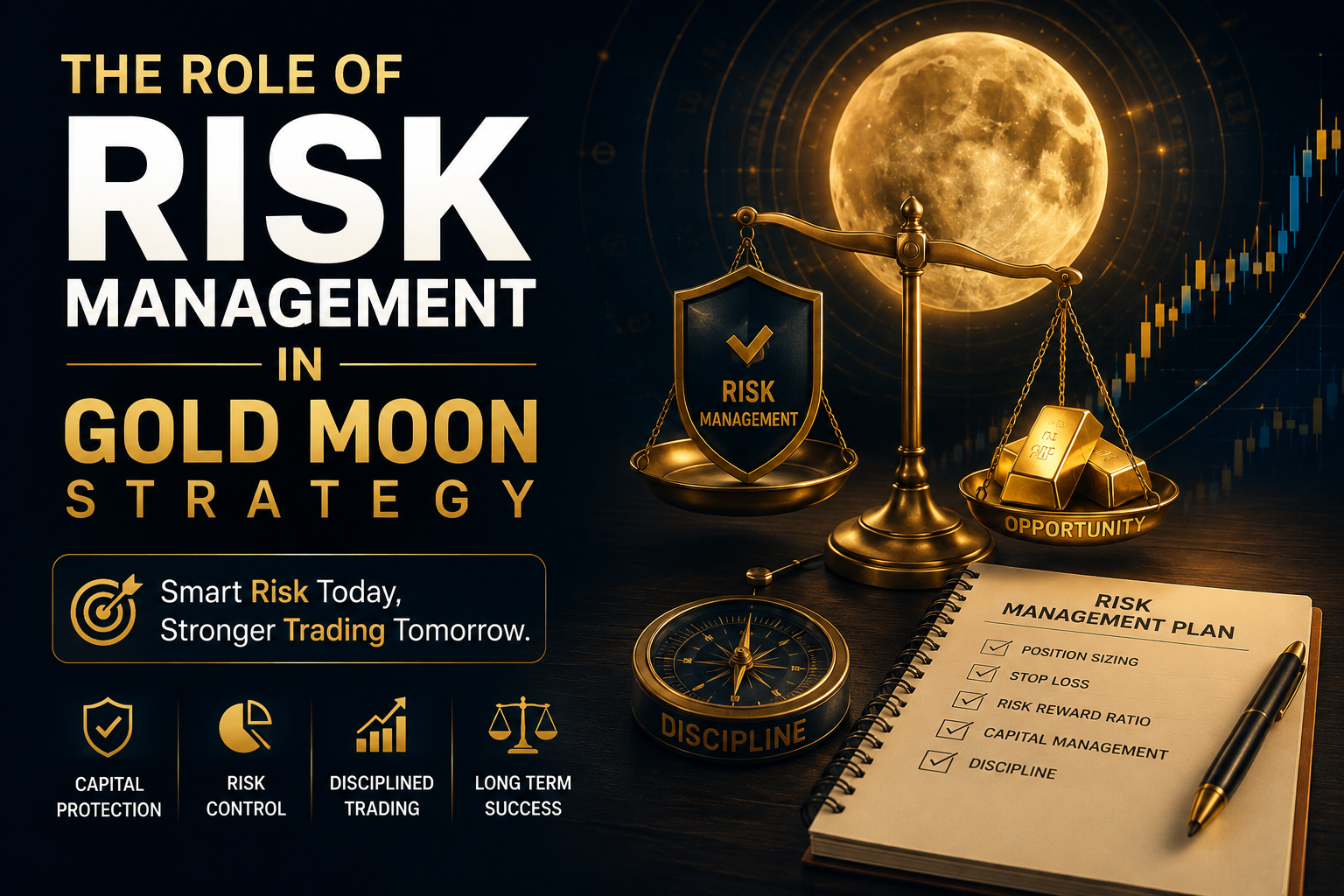
The Role of Risk Management in Gold Moon Strategy
Gold trading can offer many opportunities, but it also comes with significant market risk. Gold prices can move quickly because of changing market conditions, economic developments, currency movements, global events and shifts in market sentiment.
For this reason, having a trading strategy is only one part of the process.
Risk management is equally important.
Within the Gold Moon Strategy approach, risk management helps traders think beyond potential opportunities and focus on how much risk they are willing to accept before making a trading decision.
A structured approach combines market analysis, timing, cycles and trading discipline with responsible risk management.
What Is Risk Management in Gold Trading?
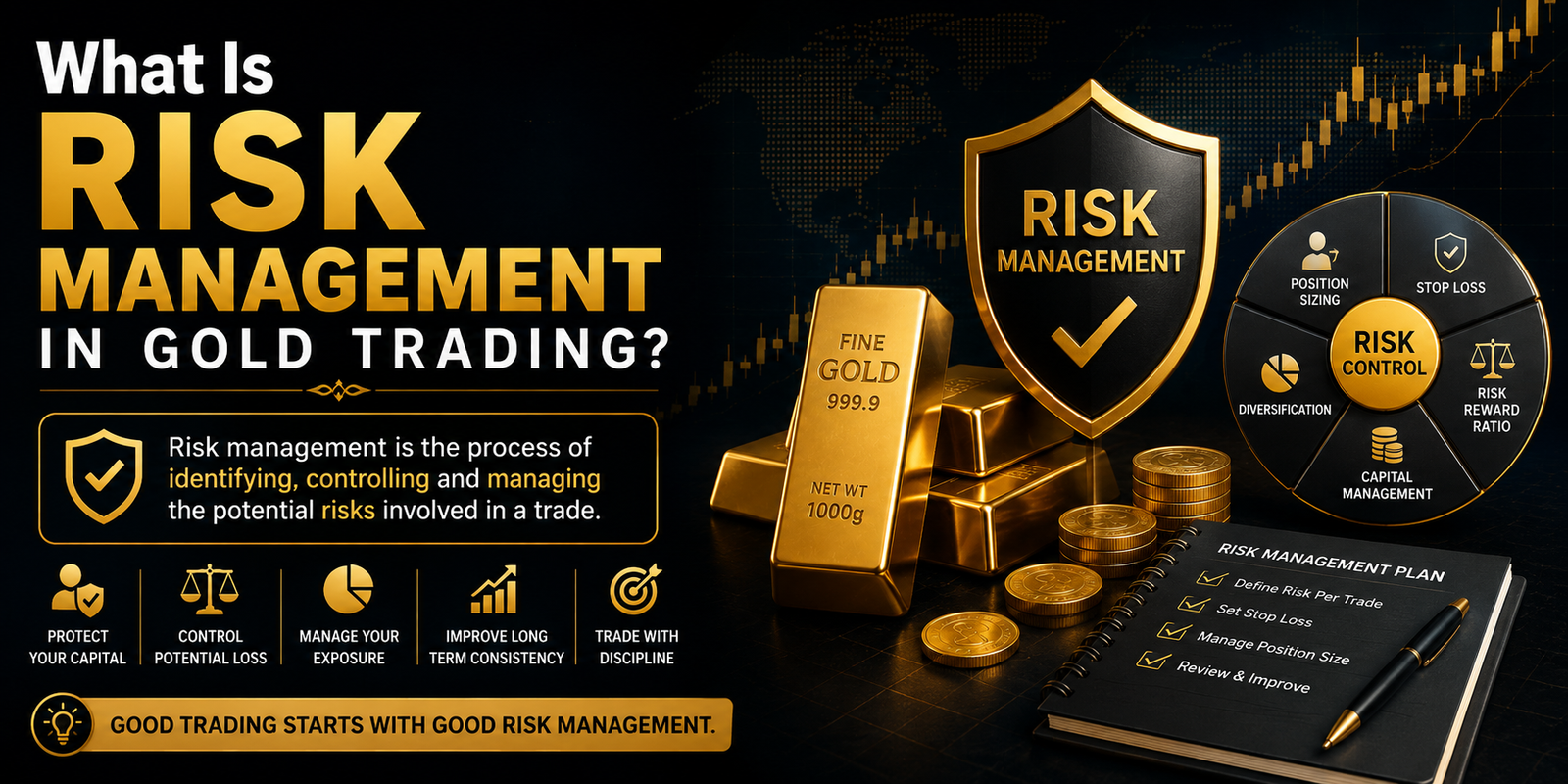
Risk management is the process of identifying, controlling and managing the potential risks involved in a trade.
Instead of focusing only on:
“How much can I make?”
a disciplined trader also asks:
“How much am I willing to risk?”
This change in perspective can help traders make more controlled decisions.
Risk management may involve:
- Position sizing
- Defining acceptable risk
- Setting an exit point
- Managing exposure
- Avoiding excessive trades
- Maintaining trading discipline
- Understanding potential losses
The objective is not to eliminate market risk. Market risk cannot be completely removed.
The objective is to manage it responsibly.
Why Risk Management Matters in Gold Trading
Gold can experience significant price movements within relatively short periods.
A trader may correctly analyse the broader market direction but still experience a loss because the market does not move as expected.
Without proper risk management, a single unsuccessful trade can have a much larger impact on a trading account.
This is why risk management should be considered before entering a trade, not after a trade starts moving against the trader.
Risk Management and Gold Moon Strategy
Gold Moon Strategy brings together several analytical concepts, including:
Market Cycles + Market Timing + Moon Cycle Analysis + Astrocycle Quants + Technical Analysis + Risk Management + Trading Psychology
Risk management provides an important foundation within this framework.
Even when market timing or technical analysis suggests a potentially interesting setup, traders still need to consider the amount of risk involved.
A market setup is not automatically a reason to take excessive exposure.
Instead, the setup should be evaluated together with the trader’s predefined risk parameters.
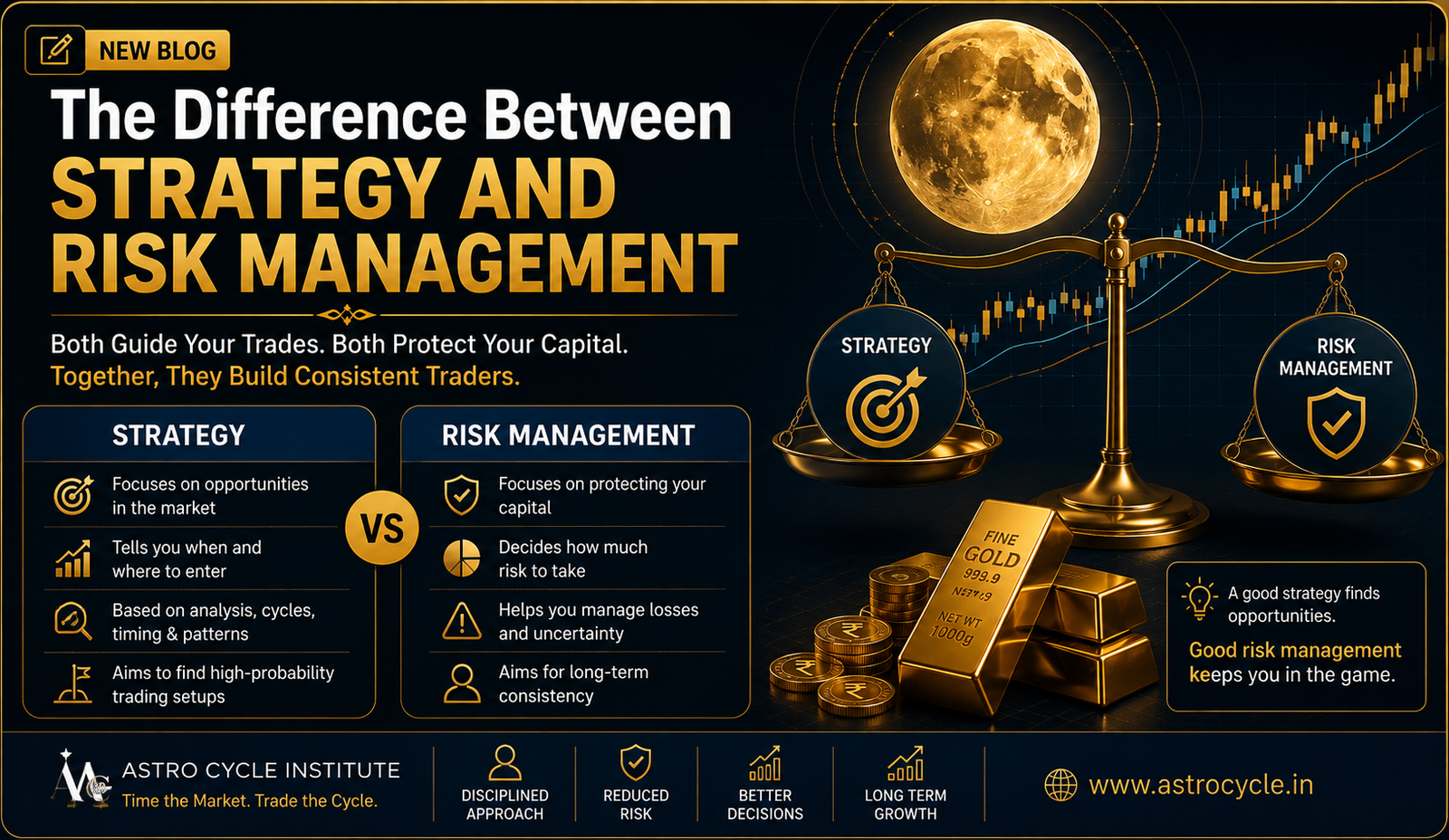
The Difference Between Strategy and Risk Management
A trading strategy helps answer questions such as:
What should I analyse?
What market conditions am I looking for?
When should I pay attention?
What type of setup am I studying?
How much am I willing to risk?
Risk management answers a different set of questions:
How large should my position be?
Where should I exit if the setup fails?
How much exposure is appropriate?
Both work together.
A strategy without risk management can expose traders to unnecessary losses.
Similarly, risk management without a structured trading approach may not provide a clear framework for analysing potential opportunities.
Position Sizing in Gold Trading
Position sizing is an important part of risk management.
It refers to determining how much capital or exposure should be used for a particular trade.
The size of a position should be considered in relation to:
- Account size
- Acceptable risk
- Market volatility
- Trading setup
- Exit level
- Overall exposure
Larger positions can increase both potential gains and potential losses.
Therefore, traders should avoid selecting position sizes simply because a particular trade appears attractive.
A disciplined approach considers risk first.
Understanding Stop-Loss and Exit Planning
A stop-loss or predefined exit level can be used as part of a risk management plan.
Before entering a trade, traders can determine the point at which their original analysis would no longer be considered valid.
This helps create a clear plan instead of making an emotional decision after the market has already moved against them.
However, stop-loss orders do not guarantee a specific execution price in every market condition. Rapid price movements and market gaps can affect execution.
Therefore, traders should understand how their chosen trading platform and market operate before using any order type.
Avoiding Overtrading
Risk management is not only about individual trades.
It is also about overall trading behaviour.
A trader may take several positions because of:
FOMO
Revenge trading
Overconfidence
Excitement after a profitable trade
Fear of missing an opportunity
Multiple trades can increase overall exposure even when each individual trade appears manageable.
A disciplined Gold Moon Strategy approach encourages traders to be selective and follow predefined trading rules rather than constantly searching for opportunities.
Risk Management and Trading Psychology
Trading decisions are strongly influenced by psychology.
Fear may cause a trader to exit too early.
Greed may encourage excessive exposure.
FOMO may lead to entering a trade without proper analysis.
After a loss, revenge trading can cause a trader to take another position simply to recover the previous loss.
Risk management can help create boundaries around these emotional reactions.
When risk parameters are decided before entering a trade, traders may be better prepared to follow their plan instead of making decisions based entirely on emotions.
Final Thoughts
Risk management is an essential part of a disciplined Gold Moon Strategy approach.
Market cycles, timing, Moon Cycle Analysis, Astrocycle Quants and technical analysis can provide different perspectives for studying gold markets. But these analytical tools should be supported by responsible risk management.
The goal is not to eliminate losses or predict every market movement.
The goal is to build a structured process that helps traders understand potential opportunities while keeping risk under control.
Analyse the Market. Respect the Risk. Trade With Discipline.
Gold trading involves significant financial risk, and no trading strategy, market timing method or analytical approach can guarantee profits. Traders should understand their own risk tolerance and use appropriate risk management before participating in financial markets.
FAQs
Why is risk management important in Gold Moon Strategy?
It helps traders control potential losses and manage trading exposure.
What is position sizing in gold trading?
Position sizing means deciding how much exposure to take in a trade based on risk.
Does Gold Moon Strategy include risk management?
Yes. Risk management is an essential part of Gold Moon Strategy. The course teaches traders how to manage capital, control risk, and develop disciplined trading habits, which are important for long-term success in the financial markets.
How does risk management support trading discipline?
It helps traders follow predefined risk limits instead of making emotional decisions.
Can beginners use risk management?
Yes. Beginners should understand risk management before participating in gold trading.